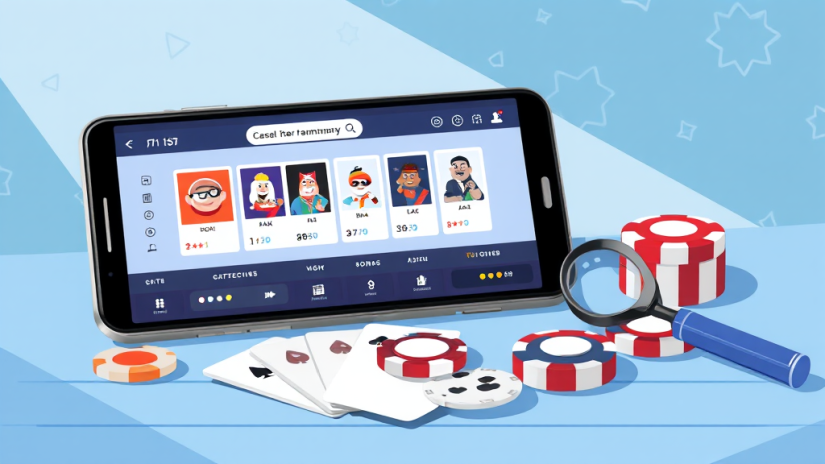
All Top Yono Rummy App: A Practical Guide to Finding and Comparing Options
If you have spent any time searching for card-game apps in India, you have probably run into the phrase “Yono Rummy.” It shows up in app store listings, forum threads, and comparison pages, often attached to a rotating set of names and versions. The reality is that there is no single official Yono Rummy app. Instead, there is a broad family of rummy-style applications that share naming conventions, interface patterns, and feature sets. This guide walks through what that ecosystem looks like, how to evaluate the options you find, and where a structured directory such as All Top Yono Rummy App can save you time. The goal here is not to push you toward any one operator but to give you a clear framework for making your own informed decision.
What the “Yono Rummy” Label Actually Means
The term “Yono” is not a regulated brand in the way a bank or telecom company is. It functions more like a naming style that many independent developers have adopted over the years. When you see a list of top Yono Rummy apps, you are usually looking at a collection of separate products that happen to use similar branding, similar lobby layouts, and similar feature language. Each one is operated by a different company, with its own terms of service, its own payment partners, and its own support channels.
That distinction matters. Two apps with almost identical names can have completely different payout speeds, different KYC requirements, and different rules about how accounts are verified. Treating them as interchangeable is one of the most common mistakes new users make. A better approach is to treat every listing as its own product and evaluate it on its own evidence.
Why People Compare Instead of Committing Immediately
Most people who search for a Yono Rummy app are not looking for a single recommendation. They are looking for a shortlist. They want to see what is available, what each option offers, and how the options differ before they commit time or money. That is a reasonable instinct, especially in a category where app quality varies widely.
Comparing also protects you from outdated information. An app that was well reviewed two years ago may have changed ownership, changed its withdrawal policy, or simply stopped updating. A directory that refreshes its listings is more useful than a blog post written once and never touched again. That is the basic value proposition behind curated rummy app directories: they compress a lot of scattered information into a single, scannable view.
Signals Worth Checking Before You Download
Not every detail on an app listing page carries equal weight. Some signals are genuinely useful, and others are mostly decorative. Here is a practical breakdown of what tends to matter most.
Payout and withdrawal clarity
Look for specific information about how withdrawals are processed, what the minimum threshold is, and whether there are documented timelines. Vague language like “fast payouts” without any supporting detail is a weak signal. Clear language with stated processing windows is a stronger one.
Signup and verification framing
Every legitimate app will have some form of account verification. What matters is whether the process is explained upfront or buried in fine print. Apps that describe their verification steps clearly tend to be easier to deal with when something goes wrong.
Category and feature filters
Some users care about tournament formats. Others care about casual tables, practice modes, or specific variants. A good comparison page lets you filter by the categories that matter to you rather than forcing you through a generic ranked list.
Ratings and review volume
A high rating based on a handful of reviews is not the same as a moderate rating based on thousands. Look at both numbers together, and be skeptical of ratings that seem unusually perfect.
Operator terms
This is the one most people skip. The operator’s current terms of service are the document that actually governs your account. No directory, including All Top Yono Rummy App, replaces that document. Treat the directory as a starting point and the terms as the final word.
How a Structured Directory Helps
Scattered information is the main problem in this space. You might find one app mentioned in a YouTube comment, another in a forum post, and a third in an app store listing that has not been updated in months. Piecing that together manually takes hours and still leaves gaps.
A structured directory solves this by organizing the same information into consistent fields. Instead of reading five different formats, you read one format applied to five different apps. That consistency is what makes comparison possible. It also makes it easier to spot patterns, such as which categories are crowded and which are underserved.
For users in India specifically, localized directories tend to be more useful than global app roundups because they reflect regional payment methods, regional support hours, and regional regulatory context. A listing that ignores those factors is only partially useful.
Common Mistakes to Avoid
Even careful users fall into predictable traps. Here are the ones that come up most often.
Assuming all similarly named apps are the same. They are not. Different operators, different rules, different support quality.
Trusting screenshots over terms. A polished interface says nothing about how withdrawals are handled. Read the terms.
Chasing the newest listing. Newer is not automatically better. Established apps with clear histories often provide a smoother experience.
Ignoring support responsiveness. Before you commit, send a test query to the support channel. How quickly and clearly they respond tells you a lot.
Skipping the responsible-play section. Every serious directory includes some form of responsible-play guidance. It exists for a reason, and it is worth reading even if you consider yourself experienced.
Building Your Own Shortlist
A good shortlist has three to five entries, not twenty. Start by filtering for the features you actually need, then narrow down based on payout clarity, support quality, and terms transparency. Once you have a shortlist, spend a few minutes on each operator’s own site before deciding anything. The directory gets you to the shortlist; the operator’s documentation gets you to the decision.
It also helps to revisit your shortlist periodically. App ecosystems change. A listing that was strong six months ago may have new competition, and a newer entrant may have addressed gaps that older apps ignored. A directory that updates regularly makes this kind of periodic review much easier.
Understanding the Informational Role of Directories
One point worth being explicit about: directories like bestplayrummy.org are informational resources. They list and compare apps, but they do not operate the apps themselves. That means the directory can help you understand the landscape, but it cannot resolve a dispute with an operator or guarantee any specific outcome. When you see a listing, you are seeing a summary, not a promise.
This is actually a healthy separation. It means the directory’s job is to organize information clearly, and the operator’s job is to deliver the service. Keeping those roles distinct makes it easier to evaluate both.
FAQ
Is there one official Yono Rummy app?
No. “Yono Rummy” is a naming style used by multiple independent developers and operators. Each app is a separate product with its own terms, support, and policies.
How do I know which listing is trustworthy?
Look for specific, verifiable details: clear payout information, documented verification steps, responsive support, and transparent operator terms. Vague marketing language is a warning sign.
Do comparison directories operate the apps they list?
Generally no. Directories such as bestplayrummy.org are informational. They organize and compare listings but do not run the underlying services.
How often should I re-check a listing?
Every few months is reasonable. App ownership, policies, and quality can change, so a listing that was accurate last year may not reflect the current situation.
What should I read before signing up anywhere?
The operator’s current terms of service. That document governs your account and takes precedence over any summary or comparison you read elsewhere.
Final Thoughts
The search for a top Yono Rummy app is really a search for good information. The apps themselves are easy to find; what is harder is finding a clear, current, consistent view of how they compare. Using a structured directory shortens that process considerably, and reading the operator’s own terms closes the loop. Approach the category with a comparison mindset, verify the details that matter to you, and treat every listing as a starting point rather than a conclusion.